🕉️
The Eternity of the Soul
The most fundamental teaching is the distinction between the temporary material body and the eternal spiritual soul (atma). As Lord Krishna declares in the Bhagavad Gita (2.20): "For the soul there is neither birth nor death at any time. He has not come into being, does not come into being, and will not come into being. He is unborn, eternal, ever-existing, and primeval. He is not slain when the body is slain." This understanding forms the bedrock of all spiritual practice and liberates the practitioner from the paralyzing fear of death and the debilitating attachment to temporary material identifications.
💎
Bhakti Yoga — The Supreme Process
Among all paths of yoga described in the Vedic literature — Karma Yoga (the path of selfless action), Jnana Yoga (the path of philosophical knowledge), Dhyana Yoga (the path of meditation), and Ashtanga Yoga (the eightfold yogic system) — Bhakti Yoga, the path of loving devotional service to the Supreme Personality of Godhead, is declared by Lord Krishna Himself as the highest and most direct process of self-realization. "Always think of Me, become My devotee, worship Me, and offer your homage unto Me. Thus you will come to Me without fail." (Bhagavad Gita 18.65). Bhakti is not mere sentiment but a comprehensive science of consciousness transformation that engages every faculty of the human personality in the service of the Supreme.
📿
The Holy Name
The chanting of the Hare Krishna Maha-Mantra — Hare Krishna Hare Krishna Krishna Krishna Hare Hare, Hare Rama Hare Rama Rama Rama Hare Hare — is the yuga-dharma, the prescribed spiritual practice for the current age of Kali. Lord Chaitanya Mahaprabhu, the combined form of Radha and Krishna, declared that the holy name alone can deliver complete spiritual perfection. This is not a sectarian proposition but a universal spiritual principle endorsed by scriptures across traditions.
📖
Scripture as Authority
The Vedic scriptures — Bhagavad Gita, Srimad Bhagavatam, Upanishads, Brahma Sutra, and the writings of the Six Goswamis of Vrindavan — serve as the infallible authority for spiritual knowledge. Just as one cannot know the identity of one's father simply by speculation but must hear from the mother, similarly, the supreme truths about God, the soul, and the creation can only be understood through the descending process of revealed knowledge (avaroha-pantha) as transmitted through the disciplic succession (guru-parampara).
🙏
Guru-Disciple Relationship
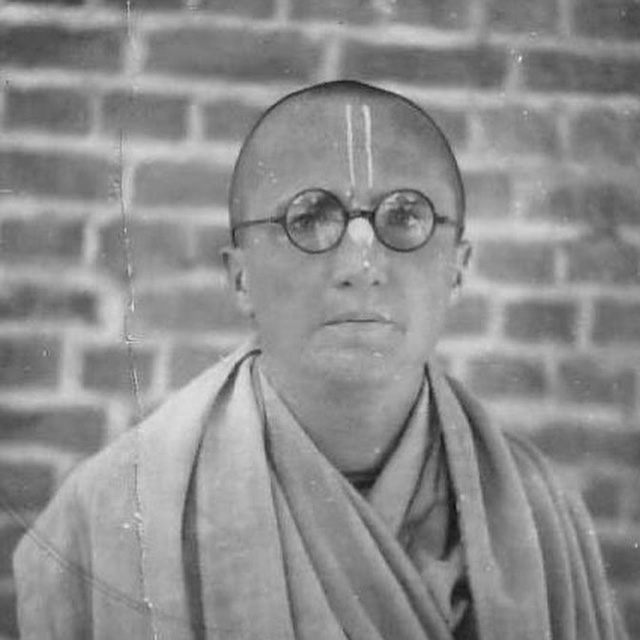
The relationship between a bonafide spiritual master (guru) and a sincere disciple is the cornerstone of Vedic spiritual education. "Just try to learn the truth by approaching a spiritual master. Inquire from him submissively and render service unto him. The self-realized souls can impart knowledge unto you because they have seen the truth." (Bhagavad Gita 4.34). Shrila Bhaktisiddhanta Sarasvati, as the transparent via medium of the disciplic succession originating from Lord Krishna Himself, continues to guide millions through his books, recorded lectures, and the institution he founded.
🌍
Universal Brotherhood
A true devotee of Krishna sees every living entity — regardless of species, race, gender, caste, or nationality — as an eternal spirit soul, a beloved child of God. This vision of universal brotherhood (vasudhaiva kutumbakam) naturally results in compassion, non-violence, and a desire to serve all beings. ISKCON's humanitarian programs, from food distribution to educational initiatives, are practical expressions of this philosophical principle that recognizes the spiritual equality of all souls.